
Women's Rights
Mobilising support for women’s rights, elevating women’s political participation, and reshaping societal perceptions have been central to Princess Basma’s priorities. She is actively engaged in local and international efforts to advance women’s status and to promote their essential role in Jordan’s socio-economic development.
The Princess serves as Chairperson of the Jordanian National Commission for Women, President of the Jordanian National Forum for Women. As Honorary Patron of the Arab Women Media Centre, Princess Basma also supports Arab Media Women Day, recognising women’s achievements in the media sector.
The Jordanian National Commission for Women (JNCW)
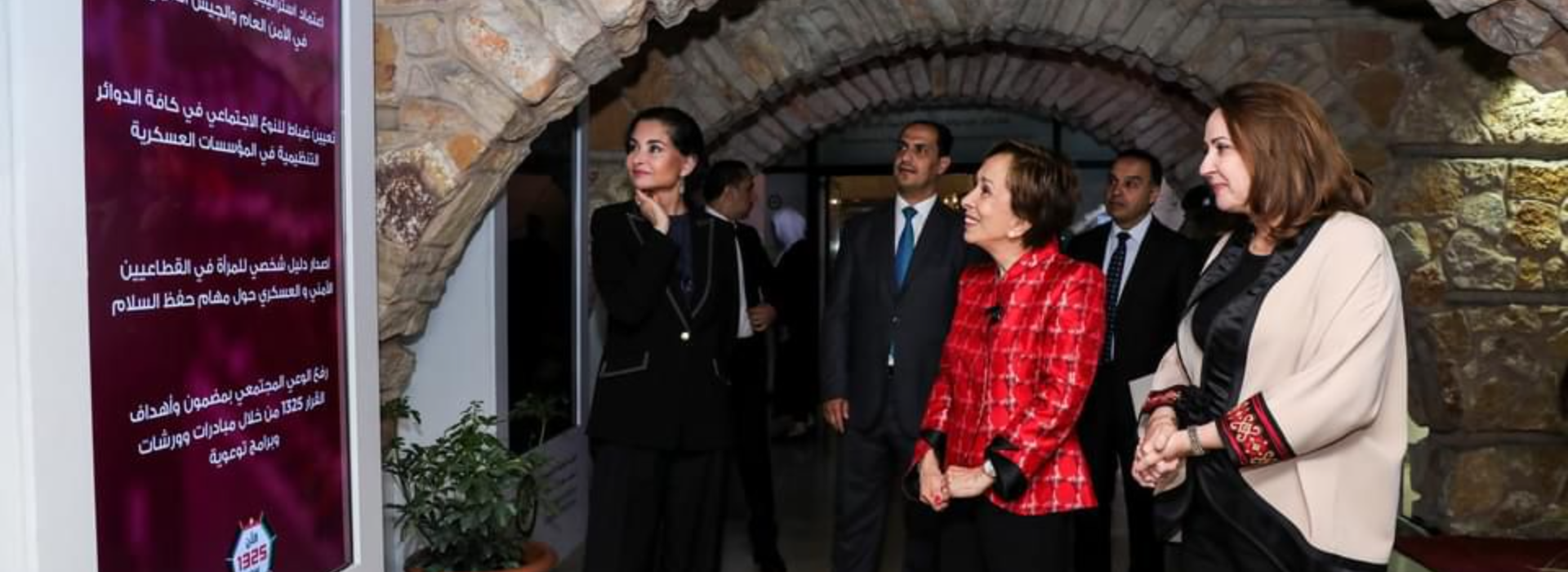
30th Anniversary of the establishment of the Jordanian National Commission For Women - 2023
.jpg)
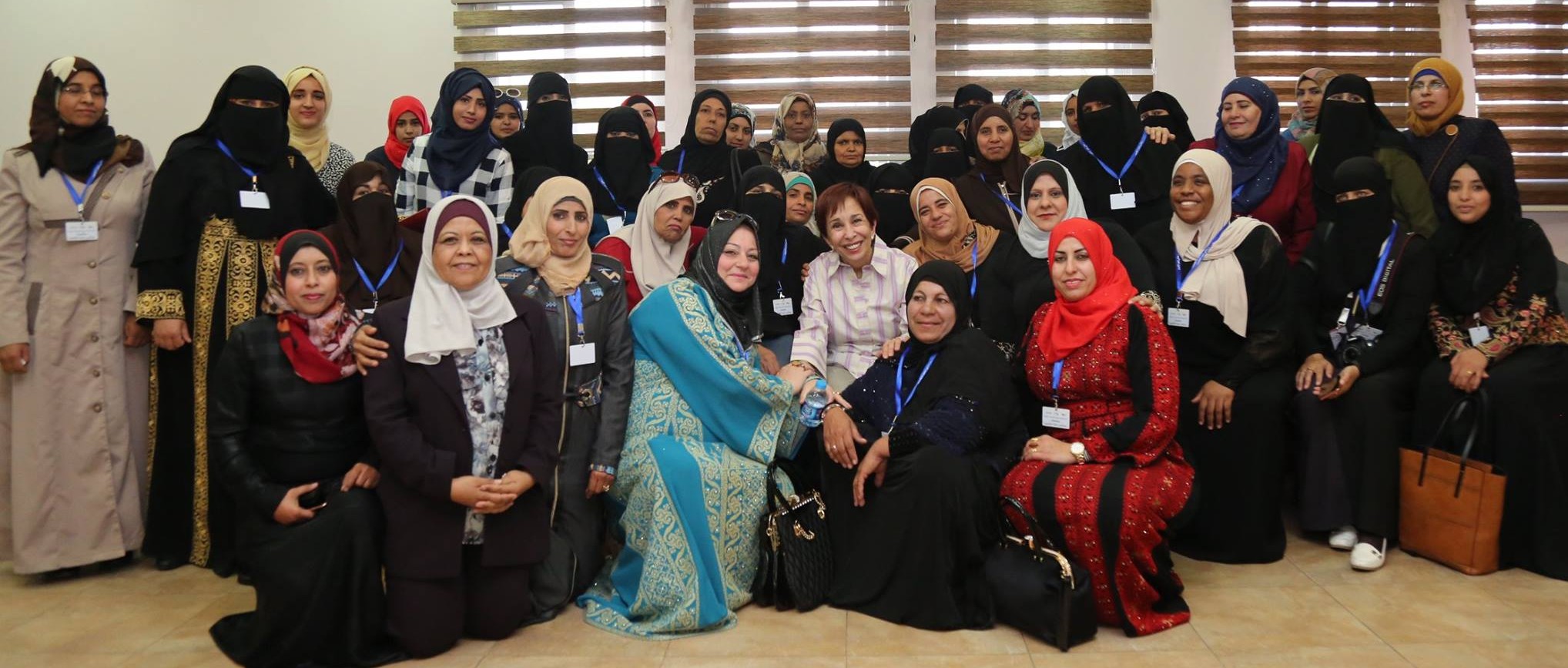
Women candidates at a training programme organized by JNCW for active participation in parliamentary elections - Mafraq 2024
The Jordanian National Commission for Women (JNCW) was established in 1992 by a Cabinet decision under the initiative and leadership of Princess Basma. Since its founding, the Commission has acted as the national reference body for women’s issues in Jordan, working to safeguard women’s constitutional rights and empower them as active partners in building sustainable national development.
JNCW strives to create a supportive environment where Jordanian women can participate more fully in political, economic, and social life. Its mission is not only to promote women’s empowerment across these areas but also to foster a positive societal culture that aims to increase equality of opportunities through collaboration with the public and private sectors, as well as civil society. Additionally, it has played a pivotal role in enhancing women’s legal protection by advocating reforms to the Penal Code and Personal Status Law, including the landmark abolition of Article 308.
Since its early years, the JNCW has achieved important milestones. In 1995, Princess Basma led the official Jordanian delegation of 147 women to the Fourth World Conference on Women in Beijing. That same year, an initiative was launched to appoint one woman in each of Jordan’s 99 temporary municipal councils, marking the first broad participation of women in local administration and paving the way for legislation that secured women’s presence in elected and appointed councils.
Over the years, JNCW has initiated major initiatives that have shaped Jordan’s progress on women’s empowerment. It developed and continually updates the National Strategy for Women since 1993—the first in the region, ensuring gender equality is integrated into laws, policies, and government programmes. It supported reforms to labour laws that advanced equal pay, paternity leave, flexible work, and safe workplaces for women. In 2011, the Jordanian National Committee for Pay Equity (NCPE) was established in partnership with the Ministry of Labour, with a mandate to promote policies and practices aimed at tackling the gender pay gap.
In terms of political empowerment, JNCW spearheaded the women’s quota in parliament, beginning with six reserved seats in 2003 and expanding to eighteen by 2022. It established Nashmiyat and the Network of Women Party Members to build skills, foster dialogue, and support women leaders.
On the international level, JNCW prepares Jordan’s national reports to CEDAW, the Beijing Platform for Action, and the Sustainable Development Goals (SDGs). It also prepared Jordan’s National Action Plan (JONAP) for UN Security Council Resolution 1325 on Women, Peace and Security. JNCW leads national campaigns to end violence against women and girls, addressing issues such as child marriage, harassment, and economic, political, and digital forms of violence. Central to this work is the Shamaa Network, a coalition that mobilizes year-round efforts to combat gender-based violence and advocate for women’s rights, including Jordan’s annual participation in the global 16 Days of Activism Against Gender-Based Violence campaign.
In 2025, the Jordanian National Commission for Women Law No. (11) of 2025 was approved by Parliament, formally institutionalizing the organization. JNCW now operates under a legal framework rather than an administrative decision, granting it legal status and reinforcing its authority to shape national gender policies and coordinate cross-sectoral efforts to advance women’s rights. This was followed by a Royal Decree which reappointed Princess Basma as Chair of the Board of Trustees.
The Jordanian National Forum for Women (JNFW)
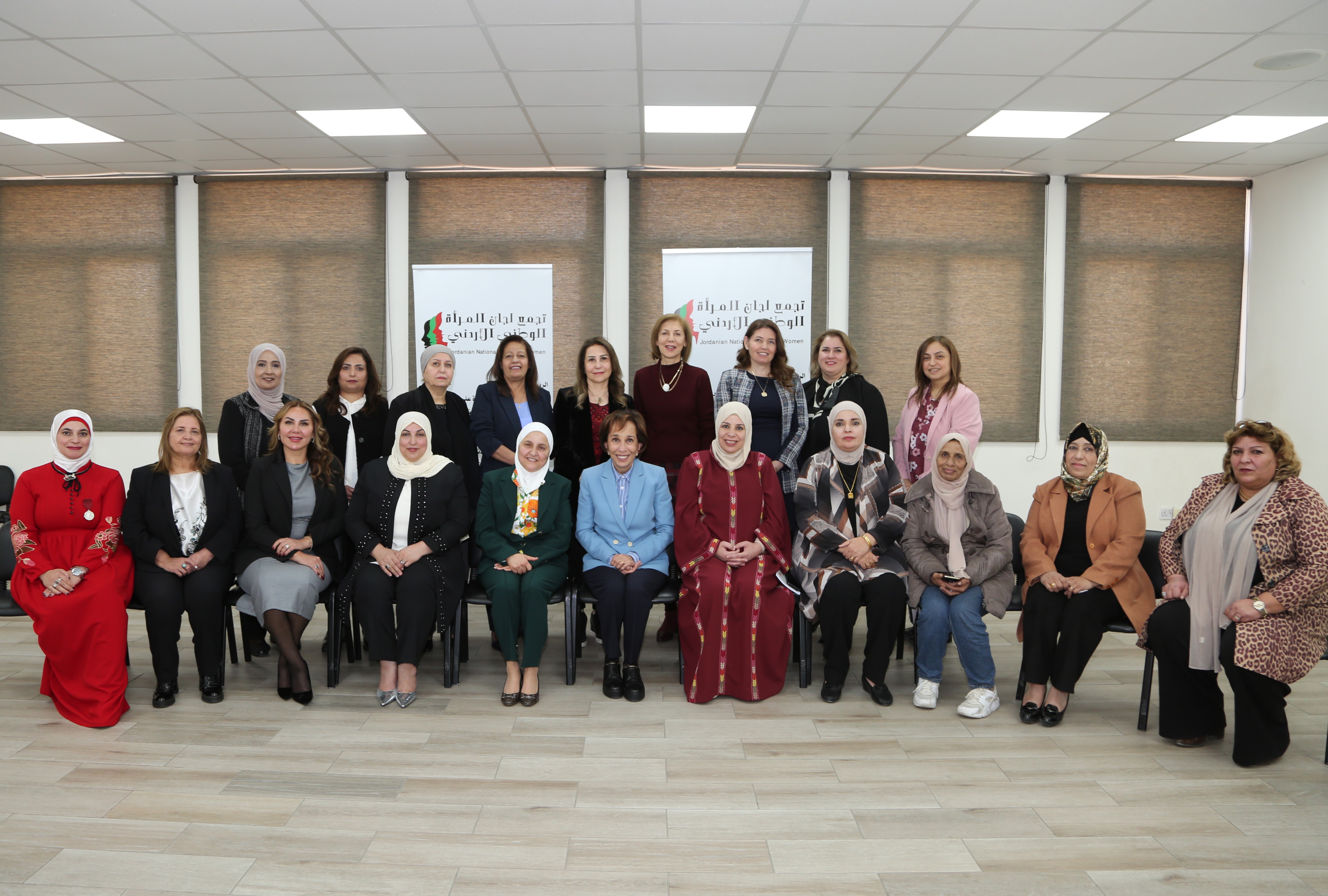
With members of the JNFW Higher Council – 2024
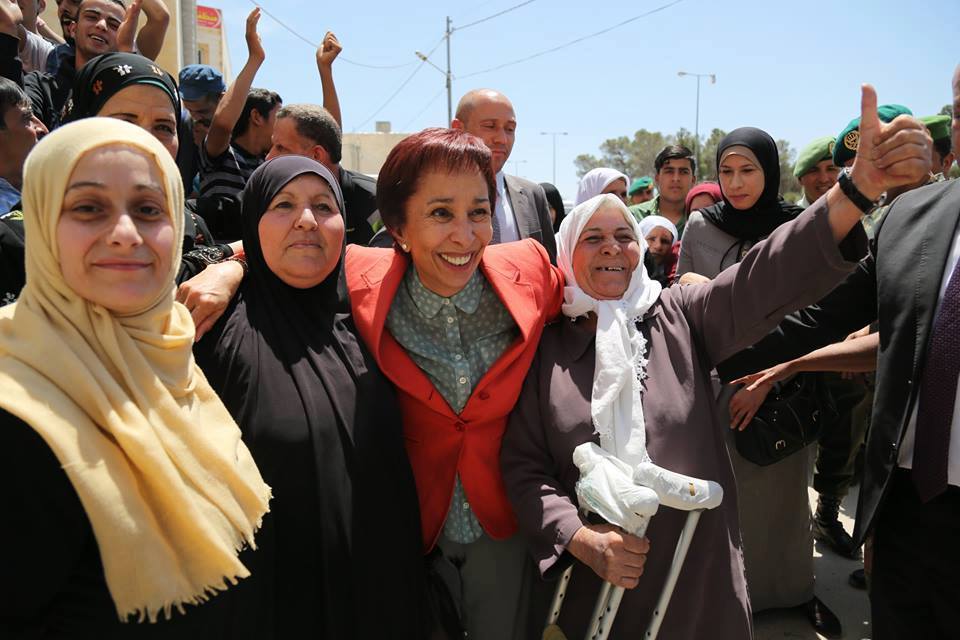
Al Baqaa Yarmouk Club - 2017
The Jordanian National Forum for Women (JNFW) was established by Princess Basma in December 1995, building upon the efforts of voluntary women’s committees formed in 1993 to raise awareness of the National Strategy for Women.
With 12 branches across the country, JNFW brings together a diverse network of women from various educational, economic, social, and cultural backgrounds. The organization is committed to promoting and empowering Jordanian women by strengthening their participation in democratic processes, political and partisan life, and national and local councils at all legislative, administrative, and organizational levels.
Through awareness-raising, training, and the creation of a supportive environment grounded in participatory democratic principles, justice, and equal opportunity, JNFW works to ensure that women are fully integrated into political, civic, and public life with an active and meaningful role